
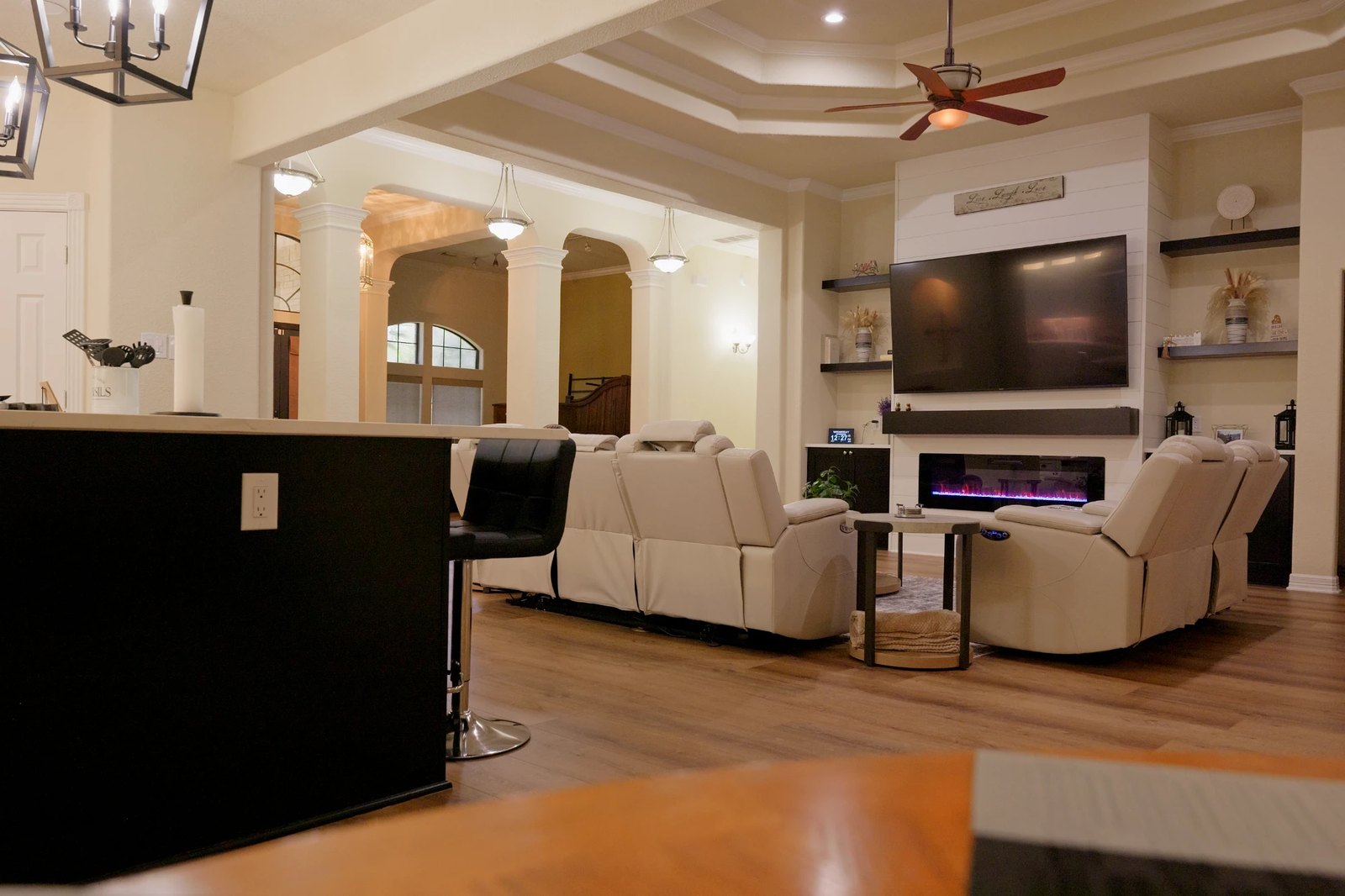
You may be able to live at home during a kitchen remodel if you can keep a usable space for meals, access to a bathroom and drinking water, and practical routes through the house outside the work area. The answer depends on the scope, which utilities will be interrupted, and what your household needs each day.
Before deciding, walk through one ordinary weekday. Where will you make breakfast? Pack lunches? Work? Feed the dog? Wash the dishes after dinner?
- Make breakfast
- Pack lunches
- Work
- Feed the dog
- Wash the dishes
The construction timeline
Those details will tell you more about staying home than the construction timeline alone.
Start with the work that will affect daily life
“Kitchen remodel” can describe very different projects. Replacing countertops while keeping most of the room intact creates different interruptions from removing cabinets, changing the layout, and replacing flooring into adjoining rooms.
Replacing countertops while keeping most of the room intact
Removing cabinets, changing the layout, and replacing flooring into adjoining rooms
Ask your contractor which spaces will be affected at each stage. Establish when you will lose access to the sink, cooking appliances, refrigerator, or routes you normally use.
The plan needs to account for the full work area. A dining room will not function as your temporary kitchen if it is also being used for material storage or sits inside the construction zone.
- 1Kitchen: the work area, inside the construction zone
- 2Dining room: used for material storage, so not a temporary kitchen
- 3Temporary kitchen, with the refrigerator moved in
- 4The bathroom the household will use
- 5Household routes outside the work area
- 6The crew’s door into the work area
Once you understand those boundaries, plan the day around them.
Breakfast: where does the morning actually happen?
Picture the busiest half-hour of your morning.
Someone needs coffee. Someone else needs breakfast. The lunches still need packing, and everyone is trying to leave on time.
The busiest half-hour
- Someone needs coffee
- Someone else needs breakfast
- The lunches need packing
Everyone trying to leave on time
A temporary kitchen should have enough room for the tasks you expect it to handle. That might mean an agreed location for a countertop microwave, a stable preparation surface, reachable food storage, and access to refrigeration.
Choose the location with your contractor so the available power, appliance setup, and access fit the construction plan. Follow the appliance manufacturers’ setup requirements.
- 1An agreed location for a countertop microwave
- 2A stable preparation surface
- 3Reachable food storage
- 4Access to refrigeration
- 5The bowls, mugs, utensils, and food you use each morning, kept together
Chosen with your contractor to fit the construction planAvailable powerAppliance setupAccess
Then simplify the routine. Choose breakfasts you can prepare with the equipment you will actually have. Keep the bowls, mugs, utensils, and food you use each morning together.
Try preparing breakfast with that setup before demolition begins. You will quickly discover whether something essential is still stored in the kitchen you are about to lose.
Lunch: keep the everyday things within reach
Packing the kitchen can create its own frustration. The room may be empty, but everything you need is now in a box somewhere else.
Before packing, set aside the things your household uses on an ordinary day. Lunch containers, a cutting board, a can opener, dish soap, towels, and the one pan that works with your temporary setup are more useful within reach than mixed into storage boxes.
Plan where groceries will go, too. A place for small appliances does not automatically leave space for bread, snacks, drinking water, and the food you bring home for the week.
Within reach
- Lunch containers
- A cutting board
- A can opener
- Dish soap
- Towels
- The one pan that works with your setup
A place for small appliances
Its own space for groceriesBreadSnacksDrinking waterThe week’s food
If the refrigerator will move, agree on its location and when that move will happen. Establish whether it will remain available throughout the work or whether you need another arrangement during specific stages.
The working day: can the house support your schedule?
Being able to sleep at home is different from being able to work there all day.
Where working from home overlaps the working hours: noise and access
Routines to share with your contractorRegular meetingsDaytime sleepSchool pickups
Tell your contractor about regular meetings, daytime sleep, school pickups, and other routines that affect access or noise tolerance. Ask about expected working hours and which stages are likely to be especially disruptive.
You may find that staying home is manageable if you work elsewhere during demolition or other noisy work. Another household may need a different arrangement because someone sleeps during the day or cannot easily relocate their workspace.
Example household
- Works elsewhere during demolition or other noisy work
- Staying home may be manageable
Another household
- Someone sleeps during the day, or a workspace cannot easily move
- May need a different arrangement
Ask how schedule changes will be communicated. Knowing that tomorrow’s work will affect your usual route or workspace gives you time to adjust.
Children and pets: separate their routines from the work area
Think about where children and pets spend time, including how they move through the house.
Is the route to the backyard through the kitchen? Is the dog’s water bowl beside the cabinets being removed? Do children normally leave backpacks where materials will be carried in?
- The route to the backyard through the kitchenA route that stays outside the work area
- The dog’s water bowl beside the cabinetsA feeding area away from the work
- Backpacks where materials come inEveryday belongings kept out of the way
Discuss how the work area will be separated, which doors the crew will use, and where household traffic should go. Relocate feeding areas and everyday belongings before those routes change.
Tell the contractor about pets that might approach workers or leave through an open door. Agree on who will manage them during arrivals, deliveries, and the working day.
Dinner: plan meals you can realistically make
After a long day, an improvised cooking arrangement can feel much less workable than it did on paper.
Build a small rotation of meals around the equipment and storage you have. Think through preparation, cooking, serving, and cleanup. A meal that needs several pots and a large preparation area may not suit a setup built around one microwave and a small table.
- Preparation
- Cooking
- Serving
- Cleanup
A small rotation of meals
Example
May not suit this setup
Budget for the meals, too. Takeout, prepared food, and smaller grocery trips may change what your household spends while the kitchen is unavailable.
Include those costs when comparing staying home with spending part of the project elsewhere. The remodel estimate and the cost of living through the remodel are separate parts of your household budget.
The remodel estimate
The work on the kitchen
The cost of living through the remodel
- Takeout
- Prepared food
- Smaller grocery trips
Cleanup: decide where the dishes will go
This is easy to overlook until the first meal is over.
Establish where dishes will be washed, where they can dry, and where food scraps and trash will go. If you plan to use another sink, check whether it is suitable for the dishes and cleanup involved. Large cookware can make a small sink arrangement awkward very quickly.
- Where dishes will be washed
- Where they can dry
- Where food scraps and trash will go
Large cookware, small sink
Talk through expected water interruptions and whether they affect only the kitchen or other parts of the house. Confirm that the bathroom you intend to use will remain accessible.
Keep the temporary kitchen’s cleaning supplies nearby. A system that takes ten minutes to assemble every night is less likely to feel manageable several weeks into the project.
At the end of the day: what will be usable?
Ask what condition the work area and adjoining routes will be left in when the crew finishes each day.
Clarify where tools and materials will remain, how debris will be handled, and which areas are available to the household. If the refrigerator is technically accessible but the route to it changes during the work, that needs to be part of the conversation.
When the crew finishes each day
- Where tools and materials remain
- How debris is handled
- Which areas the household can use
- The route to the refrigerator
Also ask what happens on days when nobody is scheduled on site. Some stages depend on drying, fabrication, inspections, or the next trade. A quiet day does not necessarily mean the kitchen is ready to use.
You should know the next milestone and what it means for access to the room.
When does staying elsewhere make more sense?
Staying elsewhere is worth considering when you cannot maintain the basic routines your household needs: meals, washing up, bathroom access, sleep, and practical movement through the home.
Could your household keep each routine going at home? Tap any it could not.
The basic routines a household needs at home.
It may also make sense when the project extends across much of the main living area or the temporary setup would be too difficult to use day after day.
The choice does not have to cover the entire project. Discuss whether there are particular stages when being away would help, followed by a return once agreed conditions are met.
Base that return on what will actually be usable. A functioning bathroom, an agreed food-preparation area, and accessible rooms are more useful criteria than assuming the house will be ready on a particular day.
- At home
- Away during particular stages
- Return once agreed conditions are met
- A functioning bathroom
- An agreed food-preparation area
- Accessible rooms
A particular day on the calendar
Bring your normal day to the estimate
You do not need to solve every household detail before meeting with a contractor. You do need to explain what your day requires.
Tell us who will be home, which rooms you rely on, whether you work remotely, and any dates that matter. Show us the routes you use and where a temporary kitchen might fit.
Tell us
- Who will be home
- Which rooms you rely on
- Whether you work remotely
- Any dates that matter
Show us
- The routes you use
- Where a temporary kitchen might fit
Your normal day
For your Houston kitchen remodel, those details belong in the planning conversation alongside cabinets, countertops, and layout.
Request an in-home kitchen estimate with CHR Builds. We can discuss the proposed work, the interruptions to expect, and what you would need in place to stay at home during the project.
Request an In-Home Estimate